Edmonton under another severe thunderstorm watch, with possibility of tornadoes nearby
Posted July 28, 2026 1:21 pm.
Last Updated July 28, 2026 7:06 pm.
Severe thunderstorms are possible in the Edmonton area late Tuesday afternoon and evening, according to the latest thunderstorm watch issued by Environment Canada.
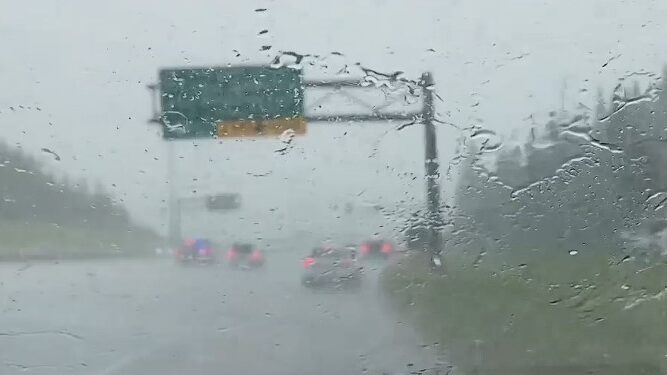
Torrential rain on top of already saturated ground is being described as the “main hazard” this time around, though damaging winds and large hail is also possible.
“Travel delays and/or cancellations are possible,” the orange-coded weather watch reads. “Driving conditions may be difficult. Utility outages are possible.
“Be prepared for severe weather. If threatening weather approaches, take cover in a basement or interior room. If outside, protect yourself from flying debris and hail.”
The severe thunderstorm watch is in effect for Edmonton, St. Albert and Sherwood Park.
Edmonton was already recovering from back-to-back storms on Saturday and Monday — the fifth and sixth major weather events since June.
Those storms led to temporary road closures due to debris and flooding. While many have since reopened – like Connors Road northbound and most of 98 Avenue – closures remain in effect for Connors Road southbound (under the northbound overpass) and the right westbound lane on 107 Avenue at Groat Road.
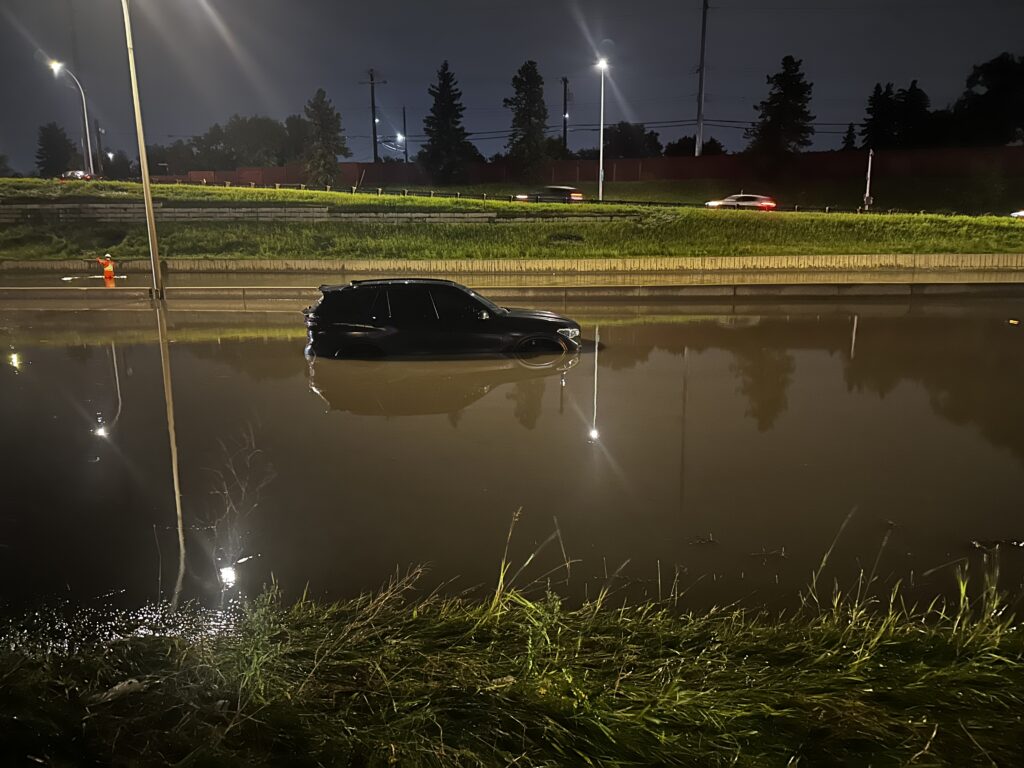
Other flood-related closures in effect until further notice are: the Muttart Conservatory; the Reuse Centre; the Indigenous Peoples Experience at Fort Edmonton Park; Telus World of Science; Peter Hemingway Aquatic Centre; and trails in Mill Creek Ravine North between 93 Avenue and 98 Avenue.
More storms are forecast for the coming weeks in what has become a soggy summer in Edmonton, with existing moisture feeding into the cycle of thunderstorms.
Tornado watch
Meanwhile a tornado watch is also in effect for several areas west and northwest of Edmonton, including Parkland County, Brazeau County and Woodlands County.
The greatest risk for tornadoes in those areas is anticipated between 4-8 p.m.
“Any thunderstorm capable of producing tornadoes will be accompanied by hail up to the size of baseballs and torrential rain,” the Environment Canada watch reads.
“Significant damage or destruction to infrastructure, homes and the natural environment is possible.”
Wettest summer on record
Edmonton has already broken a record for the wettest summer on record — and it isn’t even August.
Brian Proctor, a meteorologist at Environment Canada, says the previous wettest summer on record in the capital city was more than 70 years ago. In 1953, the city received 417 millimetres of rain from June through August.
This year, the region has been saturated by 580 millimetres of rain as of Tuesday morning, and July isn’t over yet.
“So typically, our summers, if we look at the three months of June, July and August, we see on average about 213.3 millimetres,” said Proctor.
“But this year, it has been exceptionally wet and exceptionally stormy.”
Edmonton is on track to record the wettest July — and month — on record. The record for precipitation for July is 282 millimetres set in 1901 and, as of Tuesday, the city has recorded 260.7 millimetres, Proctor said.
Last month was also the wettest June on record for the city.
Environment Canada has been keeping weather data from Edmonton since the 1880s.
Thick clouds of mosquitos
The swelling mosquito population has also led to more hospital visits for children experiencing skeeter syndrome — an intense, localized allergic reaction to mosquito saliva.
Dr. Andrew Dixon, an emergency room physician at Stollery Children’s Hospital, said it has been treating five or six children a day with the condition.
He added that skeeter syndrome is more common in children and appears worse in the beginning of the season.
“Your body kind of gets used to it over time and stops reacting as much,” Dixon said. He said the condition isn’t dangerous and antihistamines are effective in treating it.
Mike Jenkins, a senior scientist with the City of Edmonton, said the number of mosquitoes in the city in mid-July is 15 times higher compared with this time last year.
“It’s definitely the largest number of mosquitoes we’ve had in the last decade,” Jenkins said.
“But that being said, it also has been one of our driest decades on record — until now.”