Saskatchewan’s Moe backs Alberta using notwithstanding clause to end teacher strike
Posted October 31, 2025 12:22 pm.
Last Updated November 1, 2025 9:19 am.
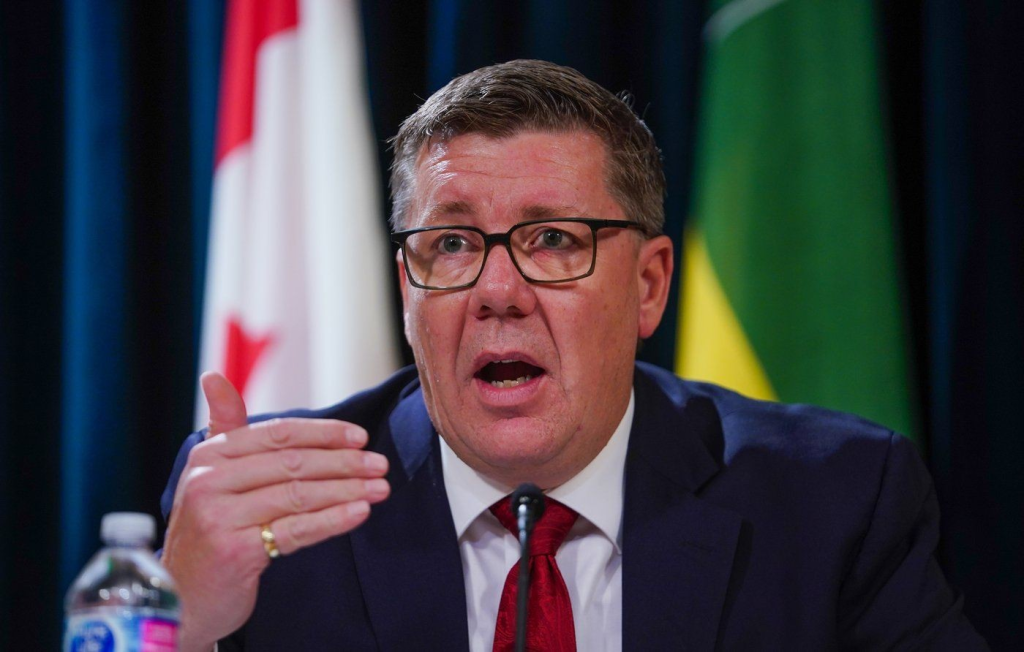
Saskatchewan Premier Scott Moe is standing by Alberta Premier Danielle Smith’s decision to use the notwithstanding clause this week to force striking teachers back to work.
Moe said Friday that the clause, which Alberta used to override teacher rights in the labour dispute, was regrettable but necessary to ensure students can be in class.
“Unfortunately, I think it’s required in the back-to-work legislation that is there,” Moe told reporters.
“This is a tool available to duly elected governments. It’s part of the Constitution to ensure that elected governments certainly are making the decisions on behalf of their residents.”
Smith’s government used the Charter’s notwithstanding clause to end a three-week provincewide teachers strike by passing through the house in just hours a bill ordering 51,000 teachers back to work.
The clause overrides rights but must be renewed every five years to help hold governments accountable.
Moe said it’s good for governments to find agreements at the bargaining table but added they must be done without interruption to public services.
“I think everybody can agree we need to do what we can to ensure that (students) are in class,” he said.
The Saskatchewan Teachers’ Federation has said Smith’s use of the clause is unprecedented and disrespectful.
“(It’s) an affront to teachers’ rights across the country,” the union said in a statement this week.
Opposition NDP Leader Carla Beck told reporters Friday the use of the clause was inexcusable.
“I think if you want to get a deal with those teachers, get to the table,” she said.
Moe’s government invoked the notwithstanding clause two years ago on a law that prevents children under 16 from changing their names or pronouns at school without parental consent.
The premier has argued parents should be involved in decisions their children make at school, while those opposed say the rules cause irreparable harm to gender-diverse youth.
The law has made its way through the courts, with the Saskatchewan Court of Appeal ruling this year a challenge of the law can continue.
The province has made an application to the Supreme Court of Canada, requesting it hear Saskatchewan’s appeal to that ruling.
This report by The Canadian Press was first published Oct. 31, 2025.