What does the pause on the federal fuel excise tax mean for Albertans?
Posted April 14, 2026 10:17 am.
Last Updated April 14, 2026 10:22 am.
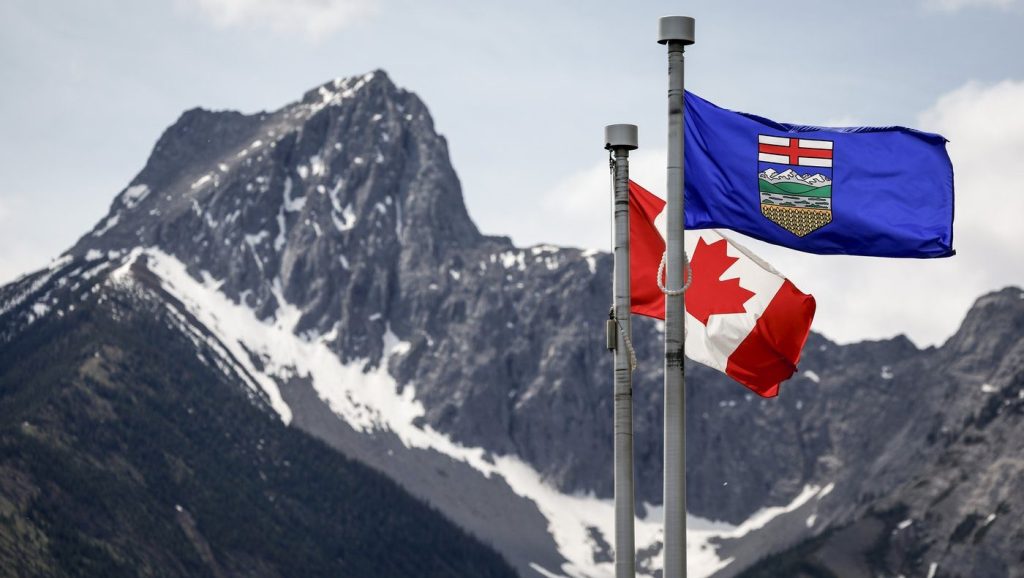
Alberta’s premier has shot down calls made in recent weeks for her government to drop the provincial fuel tax amid high prices at the pumps brought on by the war in the Middle East and the blocking of the Strait of Hormuz.
On Tuesday, Prime Minister Mark Carney, now the leader of a majority Liberal government, beat her to the punch.
Carney announced his government is suspending the federal fuel excise tax starting Monday, April 20 until Labour Day (Monday Sept. 7), as a cost-saving measure for Canadians.
Federal tax on gasoline is 10 cents per litre and four cents per litre for diesel. In Alberta, as of April 1, 2024, tax on gasoline is set at 13 cents per litre and diesel is four cents per litre.
That means if Alberta follows suit, drivers could see prices at the pump drop by as much as 23 cents a litre.
Taxes on fuel have long been a topic of debate in Alberta, especially in recent years as many struggle to make ends meet.
The United Conservative Party government first paused the provincial tax in January 2023, lowering the price at the pumps by 13 cents.
In June of that year, the province extended the pause until the end of 2023. This was one of the promises made by Smith during their campaign for re-election that year.
Provincial data says the Fuel Tax Relief Program saved drivers an estimated $1.1 billion in provincial fuel tax in 2023-24
The tax returned in 2024 alongside a new tax relief program.
Fuel tax rates for gas and diesel are adjusted quarterly in this province — the first day of January, April, July, and October — based on the average price of a barrel of West Texas Intermediate (WTI) oil.
Under provincial rules, the fuel tax should be suspended when prices are at or above $90, and partial reductions are made down to a price of $84.99.
When WTI falls below $80, the tax is reinstated.
Alberta’s website says the oil price average is based on the 20 trading days of WTI price data leading up to the 16th day of the month preceding the start of the next quarter.
Tuesday morning, WTI crude was ringing in at $93.30 a barrel.
Oil prices have been on a steady incline since the war in the Middle East began on Feb. 28, prompted by U.S. and Israeli airstrikes targeting Iranian nuclear and military infrastructure. A website that tracks oil prices across the world recorded a peak of $112.95 on Tuesday, April 7.
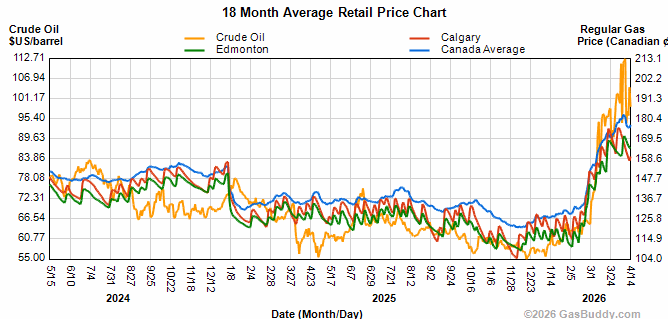
Last month, Smith said the jump in oil prices happened too late to qualify for the April 1 adjustment.
Carney isn’t the only politician supporting a gas tax cut. Conservative Leader Pierre Poilievre called for not only a suspension of the federal fuel excise tax and the GST on gas and diesel, but an elimination of the clean fuel standard and industrial carbon tax.
He claimed this would have lowered the cost of a litre of gasoline by 25 cents.
Kris Sims with the Alberta division of the Canadian Taxpayers Federation issued a statement last month calling on Smith to go against her own rules, suspending the tax immediately instead of waiting until July 1.
“Oil prices have been over $90 USD since March 6 and taxpayers are getting hit now,” she said. “Alberta Premier Danielle Smith should suspend the entire fuel tax today instead of making Albertans to wait another three months for some relief.”
With the higher cost of living, CityNews Calgary is here to help Calgarians find ways to save. The CityNews gas prices page tells you the average cost at the pumps in Calgary and the lowest price near you.