updated
‘A reset’: Edmonton must return to pre-2024 zoning bylaw for residential infill, province says
Posted October 8, 2026 11:10 am.
Last Updated October 8, 2026 7:32 pm.
The provincial government is telling Edmonton to “go back to the drawing board” and roll back its zoning bylaw for high-density infill development.
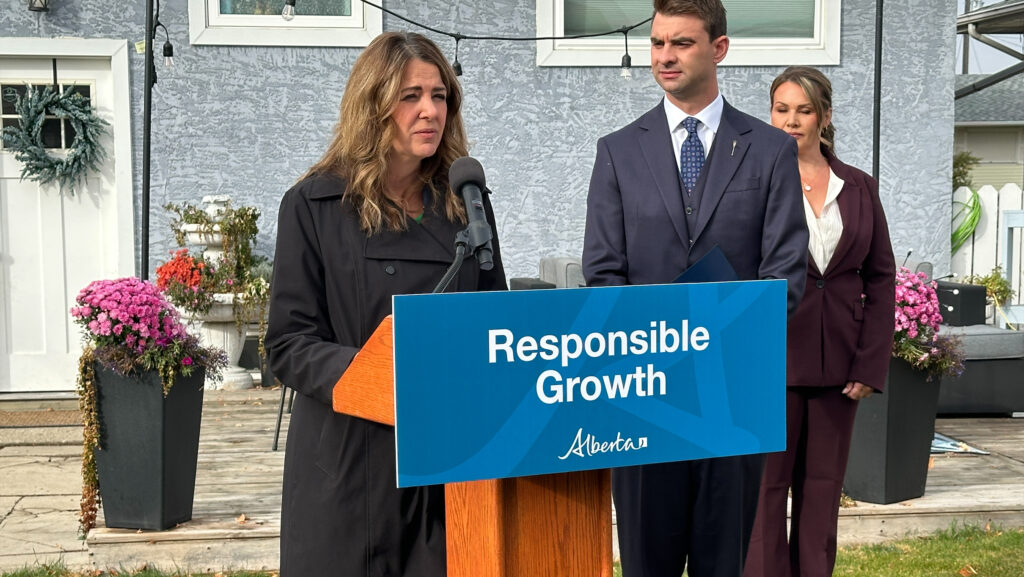
Danielle Smith announced Thursday the province is implementing policy for a regulatory framework for Edmonton to return to its pre-2024 residential infill rules.
The province says the city’s current rules are hurting Edmontonians, including “measurable impact on property values.”
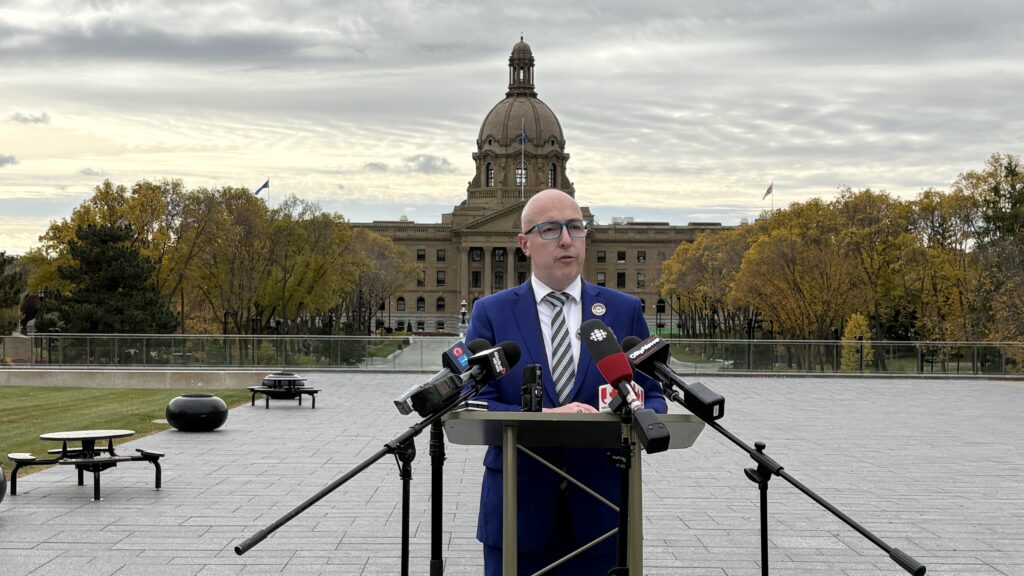
“We don’t want forced and manufactured density,” Alberta Municipal Affairs Minister Dan Williams said at a press conference alongside the premier.
“We are for development in a thoughtful way.”
Edmonton Mayor Andrew Knack says the province’s directive — which he says came about without consulting the municipality — will lead to increased property taxes, higher housing costs, declining affordability, and mean fewer people will have an opportunity to own a home in the city.
He says it’s a “significant step back in how we build out our cities.”
“They’ve made a decision to bring our zoning regulations, our city planning back to the 1960s,” Knack said, a reference to Edmonton’s original bylaw from that time, prior to the major changes in 2024.
“Pause this chaotic directive,” he urged Smith.
Knack says he will likely call an emergency consult meeting next week after reviewing the province’s directives and what those changes could mean for the city.
Edmonton’s 2024 zoning bylaw
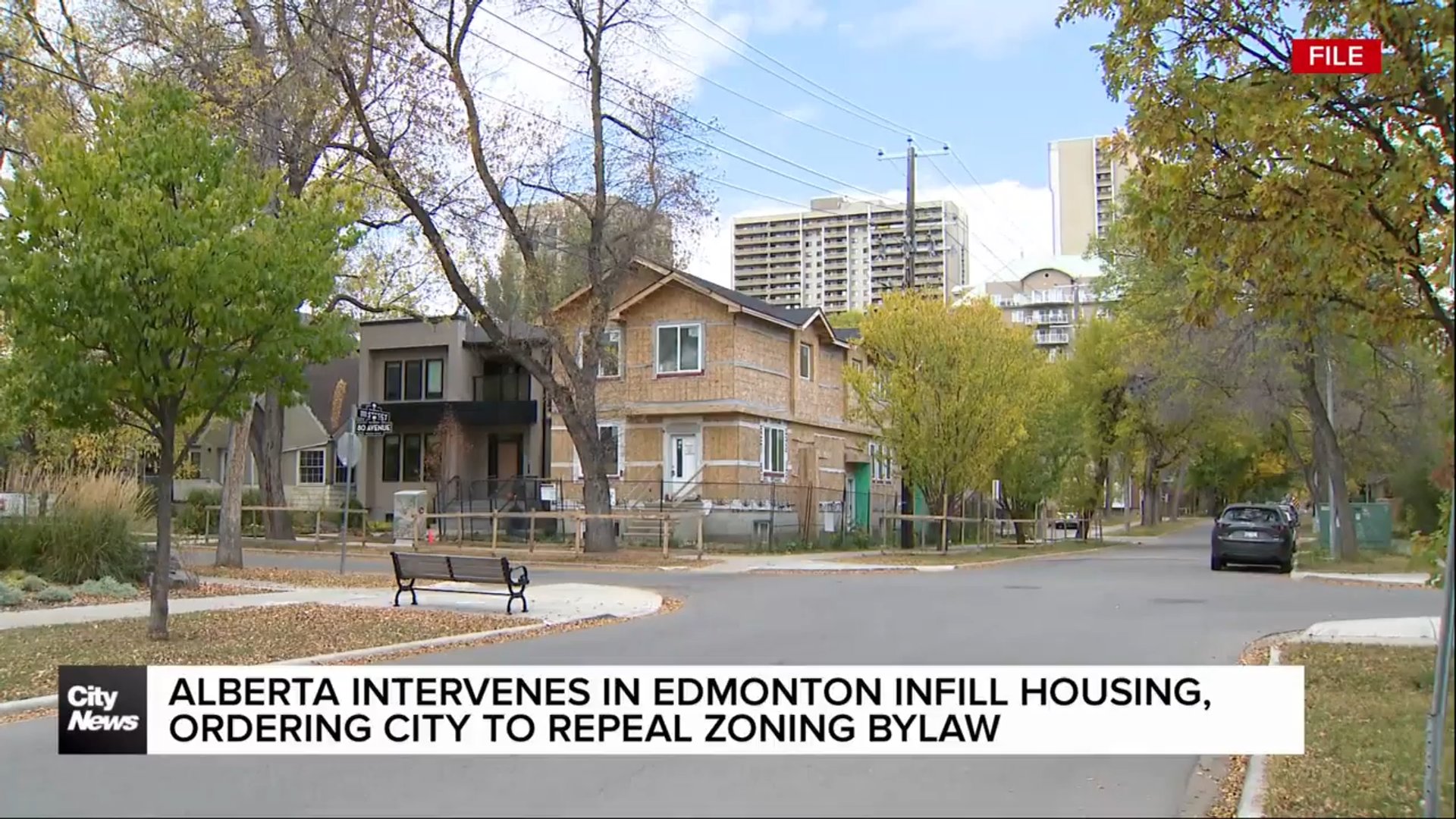
Edmonton’s existing zoning bylaw, which came into effect in January 2024, changed zones previously destined for single-family homes into more flexible residential zones; allowed for three stories of multi-unit housing in residential neighbourhoods across the city; and eliminated mandatory off-street parking minimums.
The changes were made in an effort to increase density and manage population growth.
Premier Smith described Edmonton’s zoning bylaw as having gone “a little bit off course,” which compelled the province to step in.
“You want to be able to have development that’s going to bring everybody up. You don’t want some development that’s going to bring everyone down,” she said.
“When these very large complexes were put right in the middle of a block with single-family homes, that’s when we started hearing about it.”
Ultimatum or conversation?
Edmonton is being given three months, beginning Thursday, to amend its existing land-use bylaw to reflect the reality prior to 2024, thus imposing limits on housing types, density and building heights. During that same timeframe, the province says the City of Edmonton must reintroduce parking requirements that were in place prior to 2020.
Edmonton is also being given 18 months to review its land-use bylaw, consult the public, and work with industry to pursue a more balanced approach to high-density infill.
“It’s not an ultimatum, but a conversation,” said Minister Williams. “We start with this pause. It’s a reset. It allows the City of Edmonton and anyone else that would move forward in this space to engage with its residents, builders, and importantly the province in terms of how to stay within that regulation.”
Mayor Knack says he feels like it is an ultimatum, despite how the minister is describing it.
“Let’s be clear, if we don’t follow that, they could remove us from council if they so choose. That’s how the Municipal Government Act is set up. So to suggest otherwise, that it’s a conversation… A conversation would have happened a few weeks before making this decision,” the mayor said.
“Two weeks ago to the day, I sat down with Minister Williams. He said he was working on this issue, it was important. I said, ‘great, happy to sit down with you, happy to talk through this with you.’ I got a call yesterday at 1:15 telling me what decision they’ve already made.”
Calgary, which has recently repealed blanket rezoning, is being urged to stay the course and will be directed to create an overlay identifying lands restored to previous low-density residential zones. Calgary’s broader review is currently underway and scheduled to be complete next year.
“Calgary is well on its way to doing this work already,” Smith said.
‘Attack on municipal autonomy’
Dylan Bressey, the president of Alberta Municipalities, said this was the latest example in a pattern of the Alberta government interfering with municipalities.
After listing a series of instances he described as “meddling” — such as changes to local elections or the rollback on municipal speed enforcement — Bressey said his members are concerned municipalities will be forced to take on debt they cannot afford.
“Today’s announcement impacting Edmonton is just the latest expensive attack on municipal autonomy, and municipal leaders across the province are saying enough is enough,” he said at the press conference alongside Knack.
Bressey says the “entire point” of municipalities is to make decisions that provincial officials — who are disconnected from a city’s neighbourhoods — couldn’t possibly make.
“Local decisions are best made at the local level,” he said.
Support from councillor, community groups
But not all municipal leaders were opposed to the province’s involvement.
Edmonton councillor Karen Principe, who represents Ward tastawiyiniwak, says she supports the province’s intervention and the pause on multi-unit infill.
“Council has made some adjustments to the infill rules, but I do not believe they go far enough to address the concerns residents continue to raise,” Principe said in a statement. “Residents are raising serious concerns about their family homes, property values, parking, infrastructure and the scale of development in their neighbourhoods. These concerns deserve a meaningful response.
“Housing growth must account for the people who already live here and the consequences they are being asked to bear.”
Also in support of the Alberta government stepping in was Edmonton Neighbourhoods United, a community advocacy organization whose co-founder spoke alongside Premier Smith and Minister Williams at the press conference.
Jaclyn Soroka says being opposed to the existing zoning rules “is not about being anti-growth or anti-infill.”
“It is about genuine civic engagement and responsible growth, ensuring density is thoughtfully planned, appropriately located and balanced with the needs of the communities,” she said.