Smith unveils 2026 referendum plan on immigration policy, constitutional reforms
Posted February 19, 2026 6:47 pm.
Last Updated February 20, 2026 10:24 am.
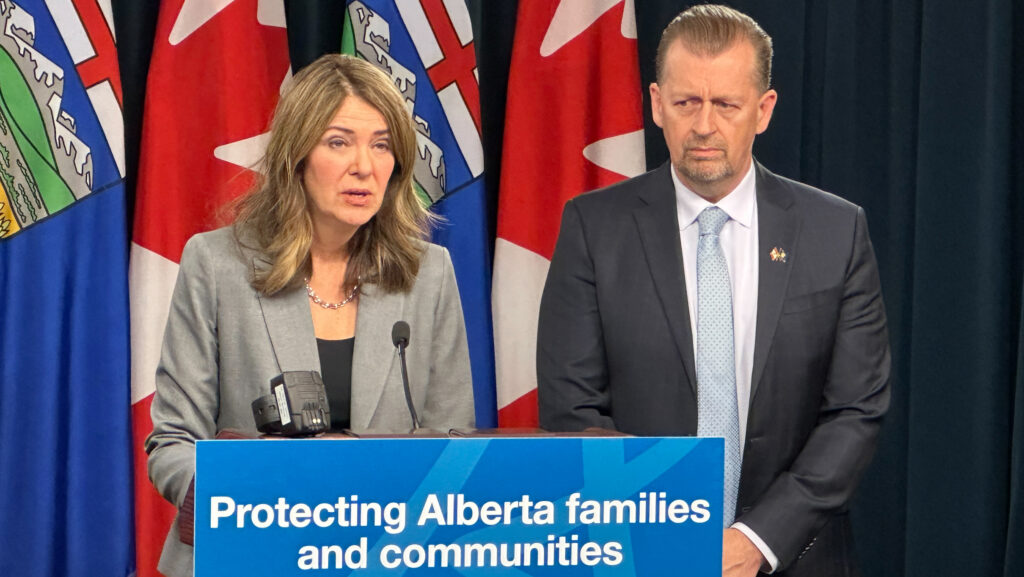
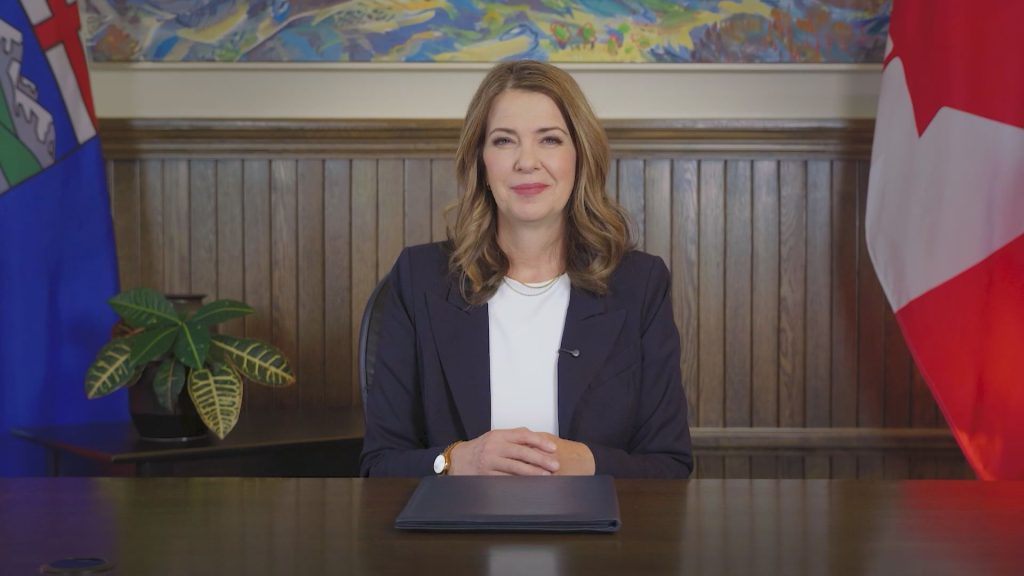
Alberta Premier Danielle Smith is warning that the province is heading into a difficult budget cycle as she unveiled a 2026 referendum plan that would give Albertans a direct say on immigration rules and potential constitutional changes.
The centrepiece of the premier’s Thursday night televised address was the announcement of a provincial referendum on Oct. 19, 2026, which will ask Albertans to weigh in on major changes to immigration policy.
“Alberta taxpayers can no longer be asked to continue to subsidize the entire country through equalization and federal transfers, permit the federal government to flood our borders with new arrivals, and then give free access to our most-generous-in-the-country social programs to anyone who moves here,” Smith said during her address.
The ballot in October will include questions on whether Alberta should take increased control over immigration, restrict provincially funded programs to citizens, permanent residents and those with Alberta‑approved status, impose a 12‑month residency requirement for non‑permanent residents seeking social supports, charge fees for their use of health and education systems, and require proof of citizenship to vote.
Related: Here are the referendum questions to be put to Albertans later this year
Smith said the province’s rapid population growth, nearly 600,000 new residents in five years, has overwhelmed schools, hospitals and social programs. She noted that many immigrant communities have deep roots in Alberta, but argued that current federal immigration policies have outpaced the province’s ability to keep up.
The UCP government has been signalling a shift in immigration for months. The Alberta Next panel tour last year sought public input on restricting access to provincial services for some newcomers. In January, the government paused a decision to cut temporary foreign workers off provincial health coverage.
Smith says the referendum questions reflect concerns raised during the panel last year.
In October, Albertans will also be asked whether the province should work with other provinces to pursue constitutional amendments, including abolishing the Senate, allowing provinces to appoint their own superior court judges, opting out of federal programs without losing funding, and giving provincial laws priority over federal ones in areas of shared jurisdiction.
“I look forward to the debate on these critically important ideas, and to receiving your decision on the questions outlined,” Smith said, adding that the answers will allow her government to implement immigration policy “that puts the needs of Albertans first,” and constitutional reforms to make Alberta “more sovereign with a united Canada.”
Last year, Smith promised a referendum on separation in 2026 if citizens gathered the required number of signatures on a petition.
One citizen-led petition to be put to lawmakers this spring could lead to a referendum on making it provincial policy for Alberta to remain in Canada. Another petition effort, with a deadline in early May, seeks to include a referendum question on withdrawing the province from Confederation if petitioners gather more than 177,000 signatures.
The list of nine referendum questions Smith says will be on the ballot in the fall can be found here.
Introduction of three-part fiscal plan
The premier’s address came as Alberta faces a projected $6.4‑billion deficit, a reversal from last year’s surplus, and as the government prepares to table its budget next week.
Smith outlined a long-term plan to grow the Alberta Heritage Savings Trust Fund to $250 billion by 2050, a medium-term goal to double oil and gas production and exports by 2035, and a short-term approach focused on limiting spending growth, reducing bureaucracy and expanding income testing for social programs.
Wage increases for doctors, nurses and teachers will remain in place, according to the premier.
She emphasized that Alberta’s economy remains strong, leading the country in job growth, investment, GDP and wages. She credited last year’s energy agreement with Ottawa, which removed the federal oil and gas production cap and net‑zero power regulations, for triggering “tens of billions” in new project announcements, including AI data centres, pipeline expansions and a major Dow Chemical investment.
“We are leading the entire country in virtually every economic category, from job growth to investment to GDP to wages,” she said. “The Alberta economy is once again booming.”
It’s falling oil prices and the aforementioned rapid population growth that have strained provincial finances and core services, according to the premier.
Oil has dropped from an average of US$90 per barrel when she became premier to around US$60 today, a decline she said has erased Alberta’s $11.6‑billion surplus and pushed the province deep into the red.
Ahead of the address, Alberta NDP Deputy Leader Rakhi Pancholi accused Smith of using the speech to “distract, scapegoat, and play the blame game” rather than address crises in health care, education and affordability.
“Albertans will be listening for solutions,” Pancholi said. “That’s not what they’ll get.”
She claims the government has created many of the problems it now cites, pointing to overcrowded classrooms, strained hospitals and rising living costs.
“Albertans deserve a government that puts their needs first, not one that shifts blame for its mismanagement,” said Pancholi.
Finance Minister Nate Horner has already cautioned that the upcoming budget will involve “tough choices,” citing global trade uncertainty and geopolitical instability. The province recorded an $8.3‑billion surplus the previous year, making the current deficit a multibillion‑dollar swing.
The provincial budget will be released Feb. 26.
With files from The Canadian Press