Carney says B.C. ‘has to agree’ on Smith’s pipeline plan as Ottawa, Alberta near memorandum of understanding
Posted November 25, 2025 11:15 am.
Last Updated November 25, 2025 4:06 pm.
Prime Minister Mark Carney says British Columbia “has to agree” on any pipeline plan from Alberta to the Pacific coast, as Ottawa nears a memorandum of understanding (MOU) with Alberta on energy.
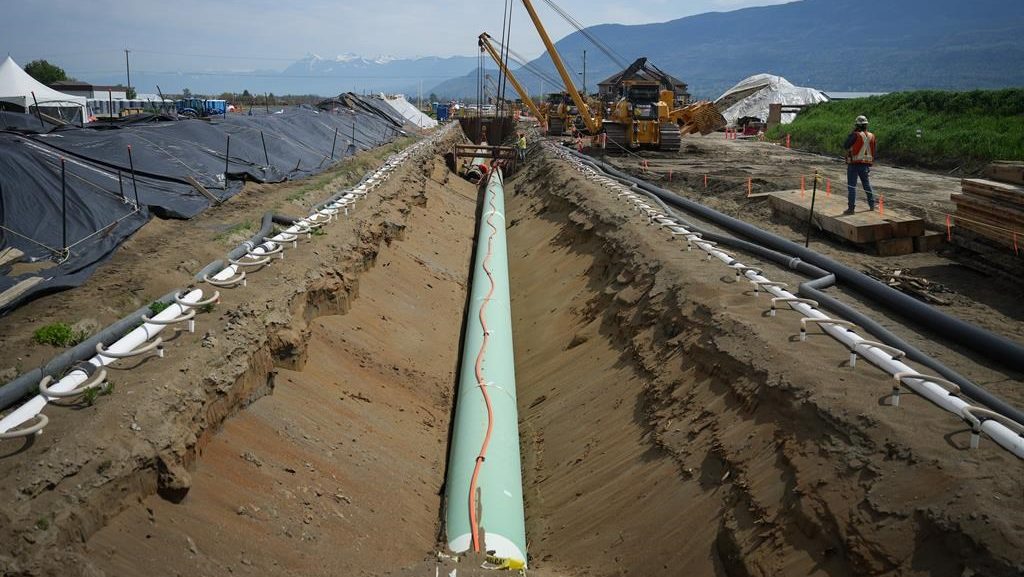
That potential pipeline would connect Alberta’s oil sands to a facility on British Columbia’s northern coast, something Alberta Premier Danielle Smith has been wanting for years.
The Carney government is edging closer to unveiling the details of that new energy pact it has been negotiating with Alberta. The agreement, which is expected to be announced Thursday while the prime minister is in Calgary, would establish the terms in which a pipeline would be developed.
In question period Tuesday, Carney was pressed by Conservative Leader Pierre Poilievre to state when a pipeline would be built. Carney said a memorandum of understanding with Alberta would lay out “necessary conditions but not sufficient conditions” for a new pipeline.
“We believe in cooperative federalism,” Carney said. “We believe the Government of British Columbia has to agree. We believe that First Nations rights holders in this country has to agree and support.”
A major obstacle for a potential Alberta-B.C. pipeline is a federal law that limits the use of oil tankers along the northern coast of B.C. The law – which prohibits tankers from carrying more than 12,500 metric tons of crude oil – was officially brought in by the Trudeau government in 2019, but it has been observed in practice for more than 50 years.
Repealing the ban is something Smith has said is necessary to move Alberta oil to overseas markets.
While appearing before the House of Commons committee on natural resources on Monday, Energy and Natural Resources Minister Tim Hodgson said the federal government is getting close to being able to provide clarity on whether Ottawa would repeal the West Coast oil tanker ban. Hodgson has previously said any pipeline through B.C. would need support from the province and First Nations.
B.C. Premier David Eby has called on Ottawa to keep the ban in place.
“I’ve reached out to Ottawa to express that business in British Columbia should be discussed with British Columbia at the table,” Eby said last week. “That message was delivered by me unequivocally to senior ministers within the government, and I’m assured was passed on to the prime minister.
“My sincere hope is that Ottawa recognizes both the jurisdiction of British Columbia and also the common sense that you might want to check with the locals if you’re discussing policy in their province.”
On Monday, Premier Eby said he told Carney it was “unacceptable” for the feds not to engage with B.C. on the pipeline push.
Asked about Eby’s complaint, Hodgson said Ottawa will be talking to B.C. “in short order.” He says the province is the “beneficiary” of having more projects than anywhere else on Ottawa’s list of major projects under consideration for fast-tracking.
On Tuesday Hodgson’s office told The Canadian Press the government wouldn’t give B.C. a veto over a pipeline project.
No company has stepped up willing to build an oil pipeline from Alberta to B.C., but Premier Smith has said her government nevertheless intends to submit a proposal to the Major Projects Office next spring.
Smith said an agreement with the federal government would involve a “grand bargain” which would see the proposed Pathways Alliance carbon capture project move forward alongside a proposed pipeline.
Visiting Ottawa last month, Smith also said she was open to reinforcing Alberta’s industrial carbon price.
When Carney cancelled the consumer carbon price last spring, he did so with a commitment to strengthening the industrial carbon price, which contributes far more to reducing carbon emissions than the consumer fuel levy. He has yet to explain how it will be strengthened.
–With files from The Canadian Press