Alberta healthcare workers strike ends after tentative agreement reached
Posted November 22, 2025 9:37 am.
Last Updated November 23, 2025 8:05 am.
Right at the eleventh hour, a strike consisting of licensed practical nurses and health care aides ended before it began Saturday, after a tentative agreement with Alberta Health Services (AHS) was reached.
As the strike was about to start, Alberta Union of Provincial Employees (AUPE) vice-president Curtis Jackson told CityNews a tentative agreement had been made, workers had been asked back to work, and they would vote on the agreement.
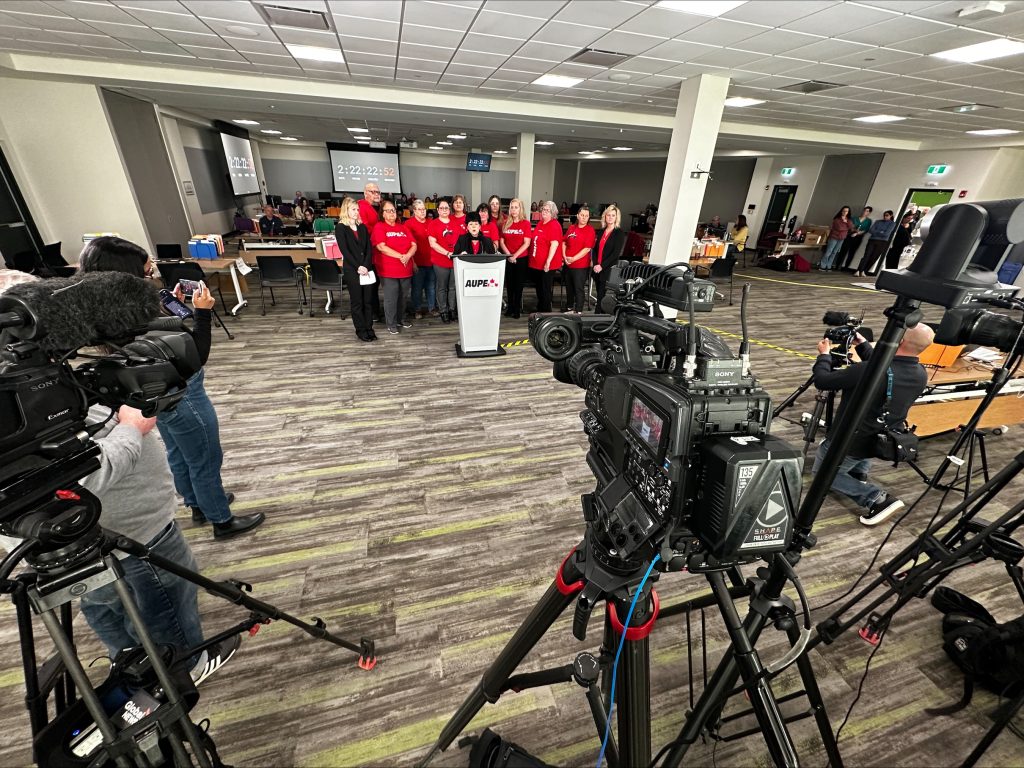
Following this, AUPE President Sandra Azocar announced at a press conference in Edmonton that the agreement was made one minute before the strike was set to begin at 8:30 a.m.
“Our strike preparedness, our unity and our determination brought AHS right to the edge, and they chose not to jump. That is the power of workers standing together,” she said.
“What this agreement proves is simple: when Members are willing to speak up, when they refuse to back down from what is fair and what is just, we can make gains, some real gains. Essential work deserves recognition. It deserves respect, and it deserves fairness.”
The bargaining agreement led by AUPE nursing care includes members from AHS, Assisted Living Alberta, Cancer Care Alberta, Alberta Emergency Health Services, Primary Care Alberta, Alan Gray Continuing Care Centre, and the Lamont Healthcare Centre.
Deal doesn’t fully address short staff; retroactive market adjustments
When it comes to the most pressing issue, Azocar says this is short staffing, noting a 12 per cent vacancy rate. She says there needs to be a “realistic human resource strategy” that addresses the situation.
“Some of the items that we were able to get here will address some of that, but we will need for it to go a little bit further so that they actually address the short staffing that faces healthcare, not only … among LPNs and health care aids, but by the entire system itself,” she said.
Lead negotiator Kate Robinson says ideas around retention, including enhancements to overtime and premiums, as well as improving work-life balance, will be going to interest arbitration.
“That issue was not resolved through this process, but we are confident that we will be able to present a compelling case at arbitration that will have a meaningful impact on our members’ work-life balance,” she said.
The deal includes a general wage increase of 12 per cent over four years for all employees in the bargaining unit, and market adjustments of 10 per cent for LPNs and four per cent for health care aides. The latter is also going to see “wage grid restructuring.”
Robinson says a large part of the negotiations was making those market adjustments retroactive to April 1, 2024, as the province had offered three per cent per year over four years.
“The market adjustments that they offered with the … significant retro pay that we did not see at other bargaining tables, we believe that that reflected the value that these workers add to the healthcare system retroactively,” she said,
Azocar says ultimately, the decision falls to members, but AUPE will stand behind any agreement they make.
“This deal may not include 100 per cent of what we asked for, but it sets a new standard in health care and, more broadly, in the labour movement. It addresses the priorities that matter most to our members and provides a foundation we can continue to build on,” she said.
Members will meet in a town hall on Nov. 25, and then have a ratification vote over three days shortly after.
When asked about the province potentially using the notwithstanding clause to force members back to work, Azucar says AUPE was ready to ensure they held on to their right to strike.
In addition, AUPE members are bound by an essential services agreement, meaning hospitals cannot be left unstaffed. Instead, any strike action would involve rotating shifts on picket lines outside hospitals.
“We were also very ready to take any fight, any legal fight that was necessary,” Azocar said.
“The narrative coming from the government that actually caused that to happen was not something that was easily used with us because we do, through the essential services agreement, we do ensure that the life and safety of Albertans is maintained and protected.”
The clause was used to end the teachers’ strike and to prevent court challenges to three bills impacting transgender youth.
Meanwhile, Finance Minister Nate Horner said in a press release that LPNs and health care aides deserve a fair agreement, adding that the settlement’s wage offers “ensure Alberta’s pay remains competitive across Canada.”
“We look forward to AUPE members having the opportunity to review and vote on the agreement. Member ratification is an important step in the bargaining process,” he said.
The union announced strike notice on Wednesday and made announcements right up until 8 a.m. that there would be a strike.
AUPE represents over 16,000 LPNs and health care aides, and it returned to the bargaining table Thursday after the strike notice was issued.
With files from Amar Shah