‘It’s a loss of hope’: Veterans concerned about health coverage for shockwave therapy

Posted November 4, 2025 5:56 pm.
Canadian veterans’ health coverage may soon look different following Veterans Affairs Canada funding changes for shockwave therapy. The changes have left the veteran community concerned, saying the consequences may be dire.
“Post service, it was just severe pain in my back, spasms all the time. Basic movements of bending down, and I tried multiple things, and I’m pretty disciplined with my fitness and my therapy, but I wasn’t getting any progress,” said Justin Yaassoub, a former Canadian Special Forces operator.
Yaassoub served in the military for 16 years. He says being able to use shockwave therapy, a non-invasive approach using low-intensity sound waves to treat conditions like chronic pain, has allowed him to be more present around his kids.
“A lot of the basic things, like changing diapers, you know, your kid runs up to get a hug and get picked up. I couldn’t do that, I’d have to la down to hold him. It was just like my brain was not talking to that part of my body, and what shockwave did is allowed that process to happen,” said Yaassoub.
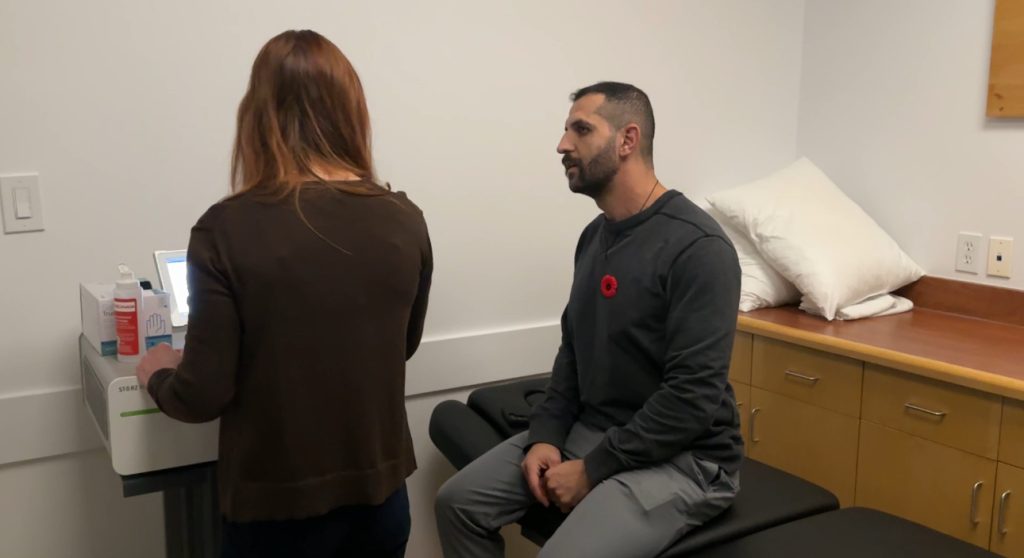
Veteran Affairs Canada has been covering shockwave therapy since 2017. But in a letter sent to veterans last July, the department said access to the therapy would be limited to up to three sessions a lifetime instead of unlimited access as per the current plan.
“Veteran Affairs is committing a great mistake. And we believe that the consequences in some cases are going to be irreversible,” said Igor Gimelshtein, the CEO of Echelon Wellness.
In the letter that was shared with CityNews, Veterans Affairs Canada said that the shockwave therapy will be considered for chronic tendon conditions only.
“The veterans will lose access to really the only treatments that work for them completely and entirely,” said Gimelshtein.
Yaassoub adding, “A lot of veterans that are experiencing PTSD, they also experience, whether from the medication or whatever, erectile dysfunction. From the chronic pain, the misery the mental piece. Now add the fact that you can’t be intimate with your spouse. Those are factors that affect decisions for suicide.”
Veterans Affairs Canada told CityNews they “regularly review available medical information and research to ensure safety and efficacy in usage, in particular where treatments or therapies are being used for new conditions.” Before pointing to new research and health recommendations against shockwave therapy for certain ailments, as they for new evidence on long-term effects.
The new changes are set to take effect in December.