‘Never seen anything like this’: 60,000 opium poppy plants found on northeast Edmonton property
Posted October 14, 2025 10:43 am.
Last Updated October 14, 2025 4:10 pm.
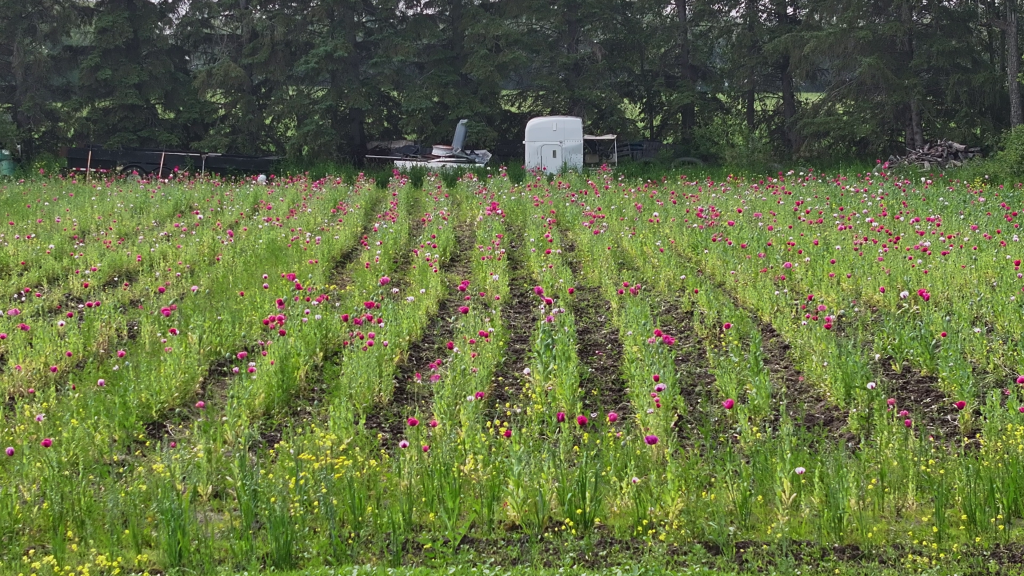
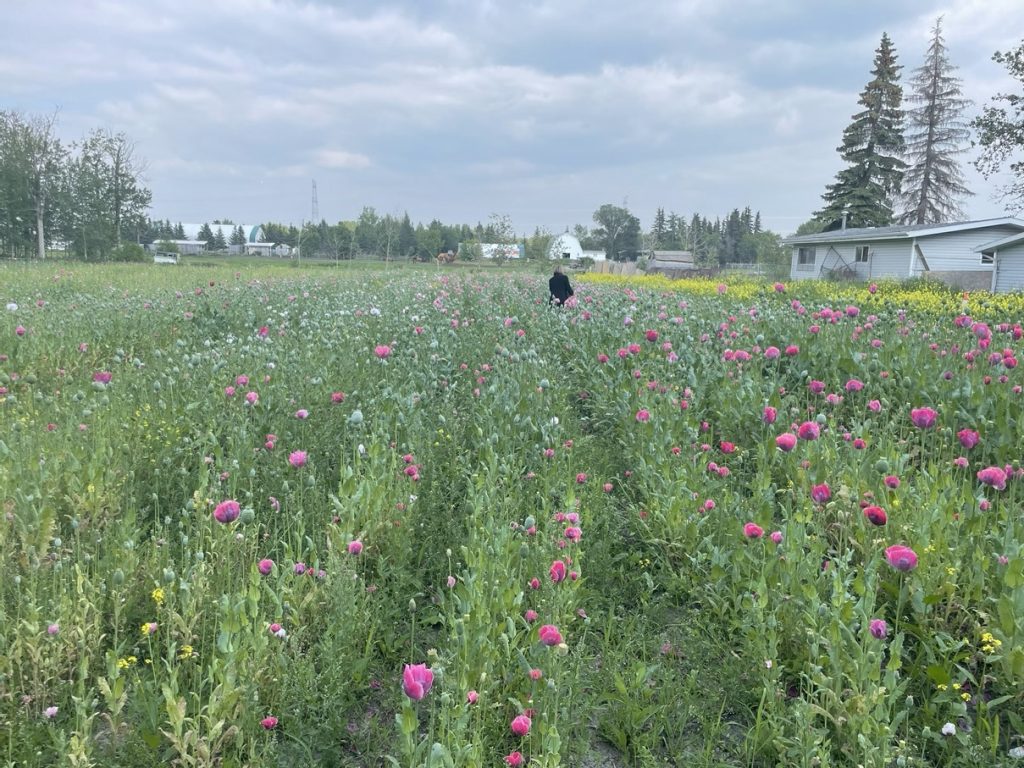
Four people are facing drug charges after police say a field of 60,000 opium poppy plants was discovered and then destroyed on a property in northeast Edmonton this summer.
It’s believed to be the second-largest seizure of opium poppy plants in Canada.
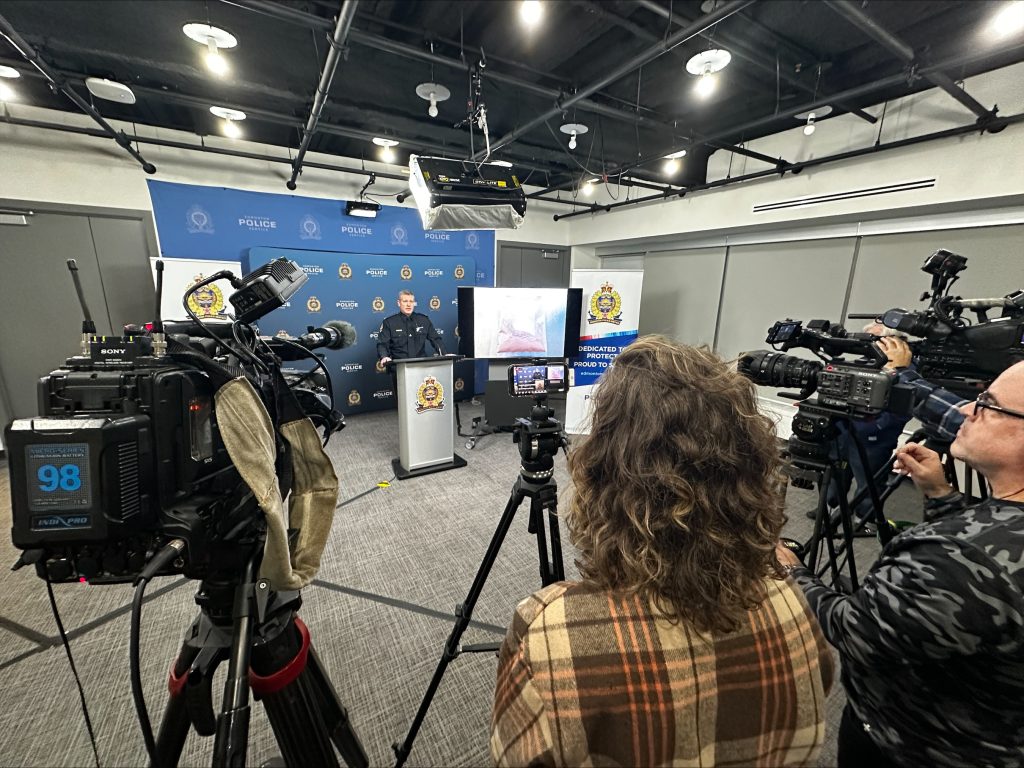
“We have never seen anything like this in the Edmonton region or in Alberta, I believe, for that matter,” Staff Sgt. Marco Antonio of the Edmonton Drug and Gang Enforcement (EDGE) told reporters Tuesday.
Authorities believe the plants were being grown to sell on the illicit market or to produce doda powder, which is used in a “highly addictive” painkilling tea that’s very popular in south Asian regions. They believe the plants or product would have been sold in Edmonton.
“I think it was someone looking to obviously cash in from this product that can be made from it,” Antonio explained.
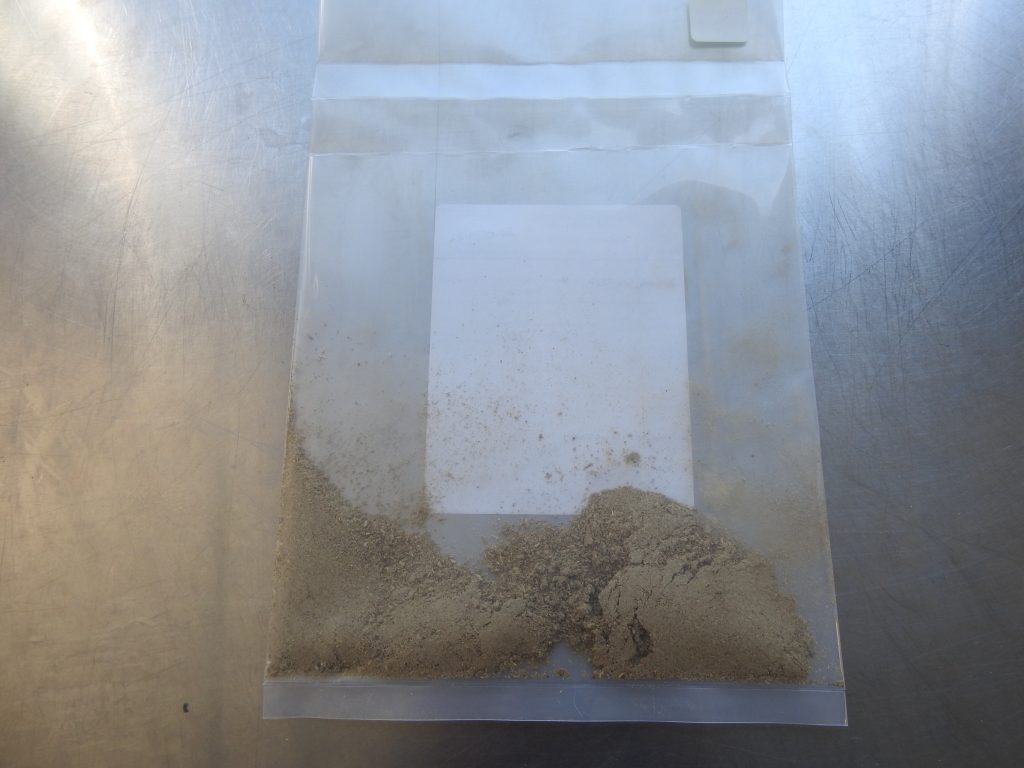
Police do not know where the plants were being turned into powder.
“Any opioid drug, including doda, consumed outside the direction of a doctor or when illicitly produced, can pose significant health risks to the consumer, leading to severe addiction and harm to the community,” Antonio added.
Police estimate the crop was about a week away – five to seven days – from reaching the perfect timing for future processing when officers executed a search warrant July 4 at the property on 34 Street and 195 Avenue NW.
Four suspects – ranging in age from 30 to 42 – were charged with production of a controlled substance.
Officers say they were tipped off about the property – though they wouldn’t say by who – which triggered a two-day investigation. They say the field was behind the house, and there was “makeshift plywood” set up to hide it from view.
“It wasn’t actually that easy to spot … so there was some indication that there was some attempts to hide it,” Antonio said.

Ground poppy contains analgesic opium alkaloids, like morphine, explained Richelle Booker, a forensic pharmacologist with Alberta Law Enforcement Response Teams. While not as toxic as synthetic opioids, Booker explains ground poppy can create a physical dependence, lead to overdose, and is an illegal Schedule 1 substance in Canada.
That specific type of poppy — the plant itself is illegal — can be processed to make heroin and other opioids, though authorities say the process to make heroin and doda are very different. There was no indication heroin was being produced on the property.
“The powder, the doda itself, that’s not typically how you would get to heroin,” said Staff Sgt. Antonio. “So there’s other processes that need to be involved with chemicals to get it from the latex that the opium poppy pods will secrete, which has the alkaloid in it, and then you’ll have to do a bunch of processing to get it to heroin. So it’s possible, but not in the way that we believe it was being used.”
Dr. Avi Aulakh, a psychiatrist and addictions specialist at the Savera medical centre in Edmonton, says the dangers opioids – even in tea form – are very real.
“The withdrawals, for example, the physical dependence is there,” he told CityNews. Then it can impact your social wellbeing, family life, financial, occupational, it has all the impacts.”
Dr. Aulakh, who opened Savera shortly before the COVID-19 pandemic, treats patients with a variety of addictions. He says he has noticed an increase in patients using doda.
“When we do tests, sometimes they have been only taking doda or opium, but their tests show fentanyl, so it’s also the dealers who are actually selling fentanyl-laced powder as doda.”
Doda is marginally present on the illegal market, authorities say. It is occasionally seized by law enforcement, but not regularly.
Growing opium poppy plants in Canada is not common given the climate, with the plant thriving in more temperate conditions.
“They’re not native to North America, but they can grow in this climate with certain care,” Booker explained. “And so it does depend on the type of soil, as well as requiring fertilization, and there was indication of that happening at this particular location. But they do, they can grow in this climate. They just prefer other types of climates around the world.”
Police say there was an investigation in Edmonton into dried poppy heads in 2018. In that instance, the seeds were not planted in the ground.
The largest bust of poppy plants in Canada came in Chilliwack, B.C., in 2010 – when officers shut down a field three times the size of the one found in northeast Edmonton this summer.
“From talking to frontline officers and patrol, we did come across individual plants being grown by people the odd time,” Antonio said. “Calgary, I believe, had also a smaller scale one, but nothing in this scale. We haven’t seen anything like that.”
–With files from Elliott Knopp